
c. 1865–2017
The Bollini story
Magnacavallo · Bariri · Chapada dos Guimarães
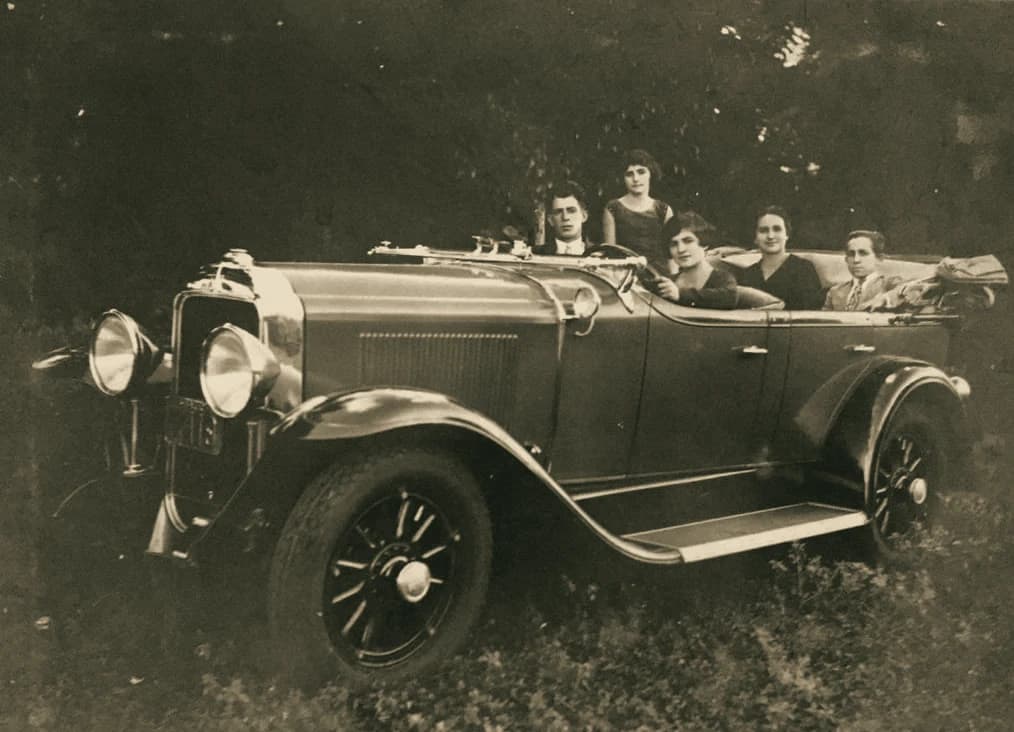
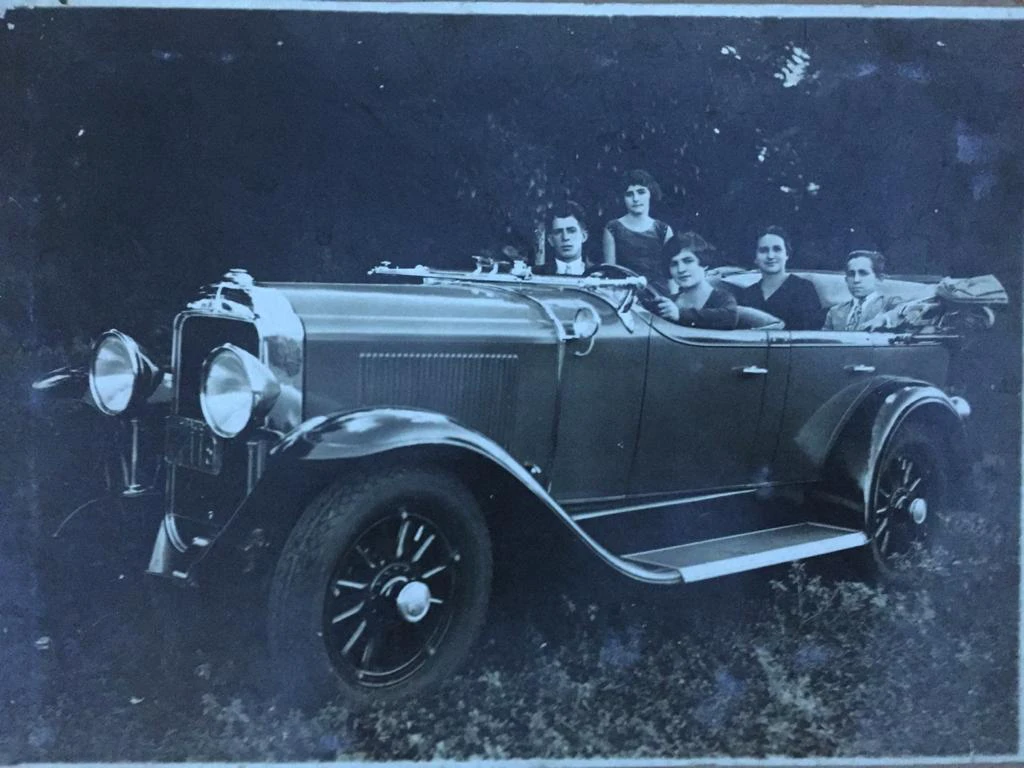
Early 1929. Maria Aparecida at the wheel of the family’s Buick.
Family archive · See the original: the 1929 photograph
From Magnacavallo to the coffee lands
The Bollini story in Brazil begins with Pasquale Bollini, who left Magnacavallo, a farming town on the Po plain near Mantova. According to family tradition, he arrived in Brazil around 1865 and settled in the coffee country of São Paulo state. His son Pietro, known in Brazil as Pedro, was born in the early 1900s and became the owner of a coffee farm in Bariri.
The wealth of coffee
By the late 1920s, coffee had made the São Paulo interior rich, and Pedro was part of that prosperity. In early 1929 the family owned a large Buick touring car, a luxury few in Brazil could afford. A family photo from those months shows Pedro’s wife, Maria Aparecida, at the wheel, pregnant with their first daughter, Lysette Bollini, born on June 18, 1929.
The Mato Grosso land
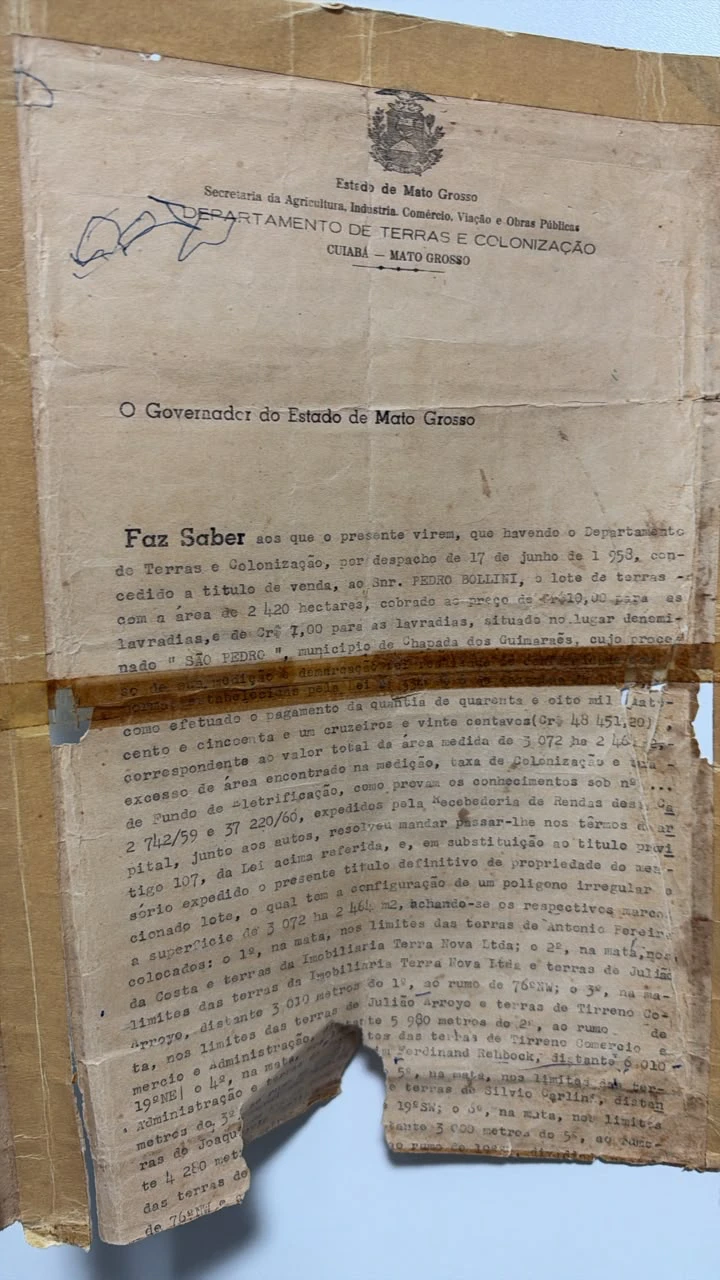
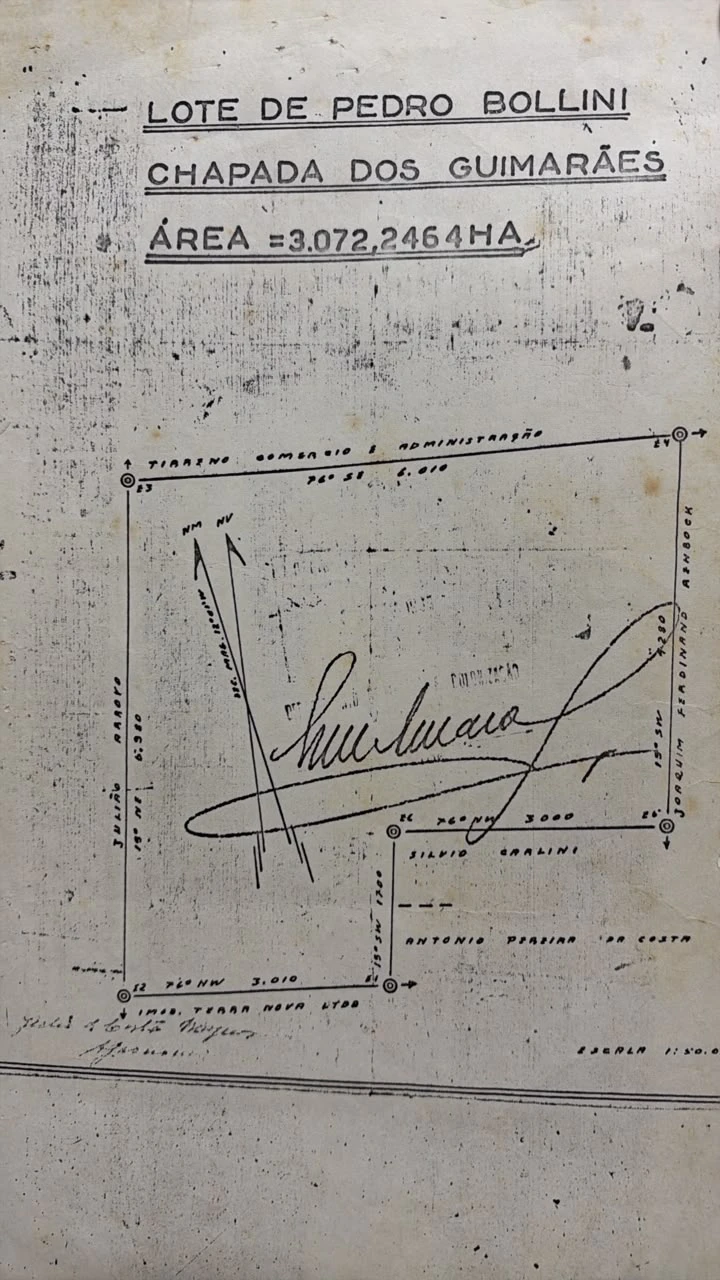
Three decades later, Pedro bought land on the Mato Grosso frontier. The original title, kept by the family, records that on June 17, 1958, the state’s Department of Lands and Colonization granted Pedro Bollini, by sale, a lot at a place called São Pedro in the municipality of Chapada dos Guimarães. The survey measured 3,072 hectares and 2,464 m². Pedro paid Cr$48,451.20, including colonization and electrification fees, in installments receipted in 1959 and 1960. The Governor of Mato Grosso then issued a definitive title of ownership, replacing an earlier provisional one. The survey was carried out under Mato Grosso’s Land Code, state law 336 of 1949, and the attached map, titled “Lote de Pedro Bollini,” shows the lot’s boundaries with its neighbors.
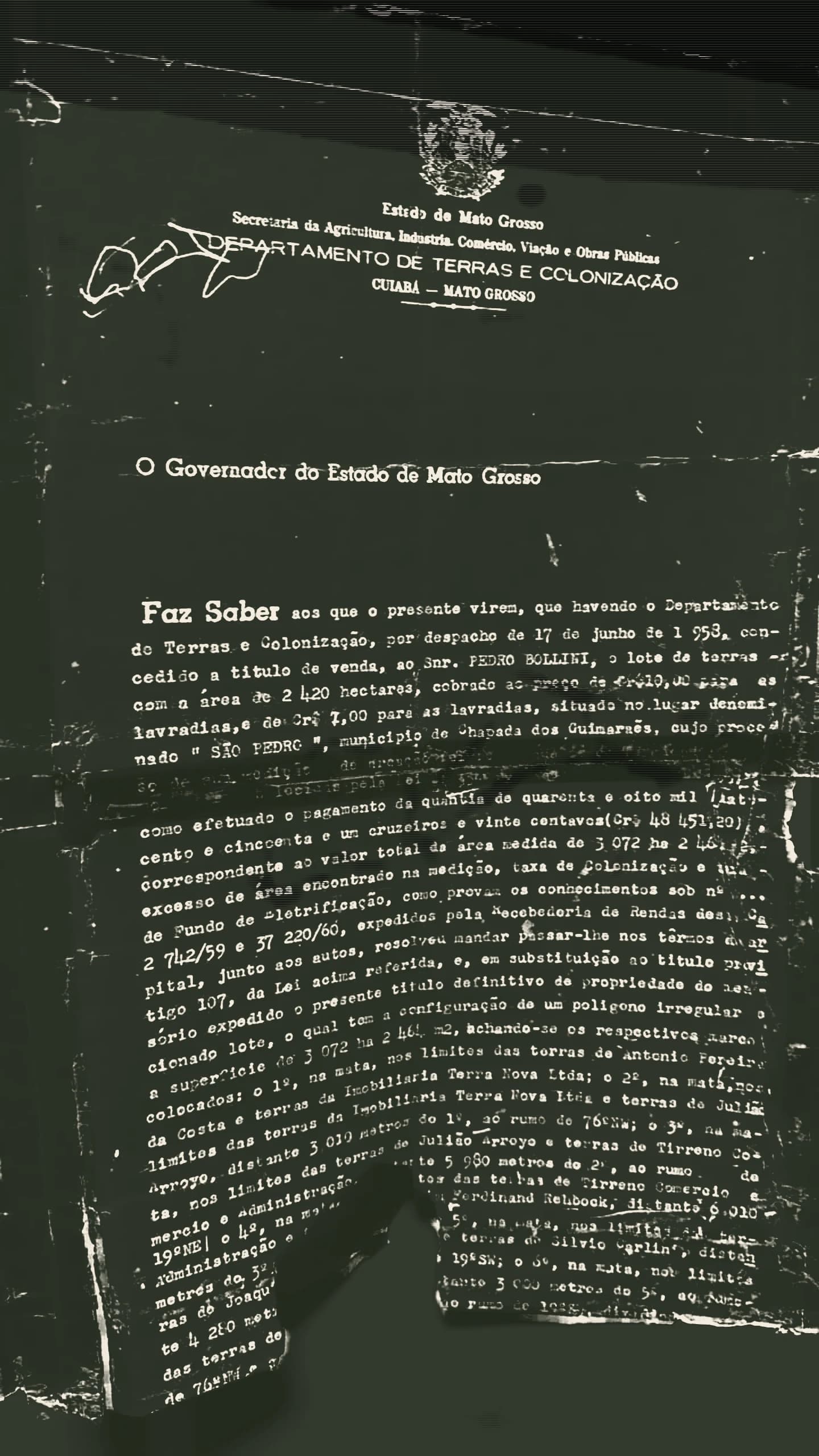
The definitive title of ownership, issued by the Governor of Mato Grosso.
Family archive · See the original: the 1958 title
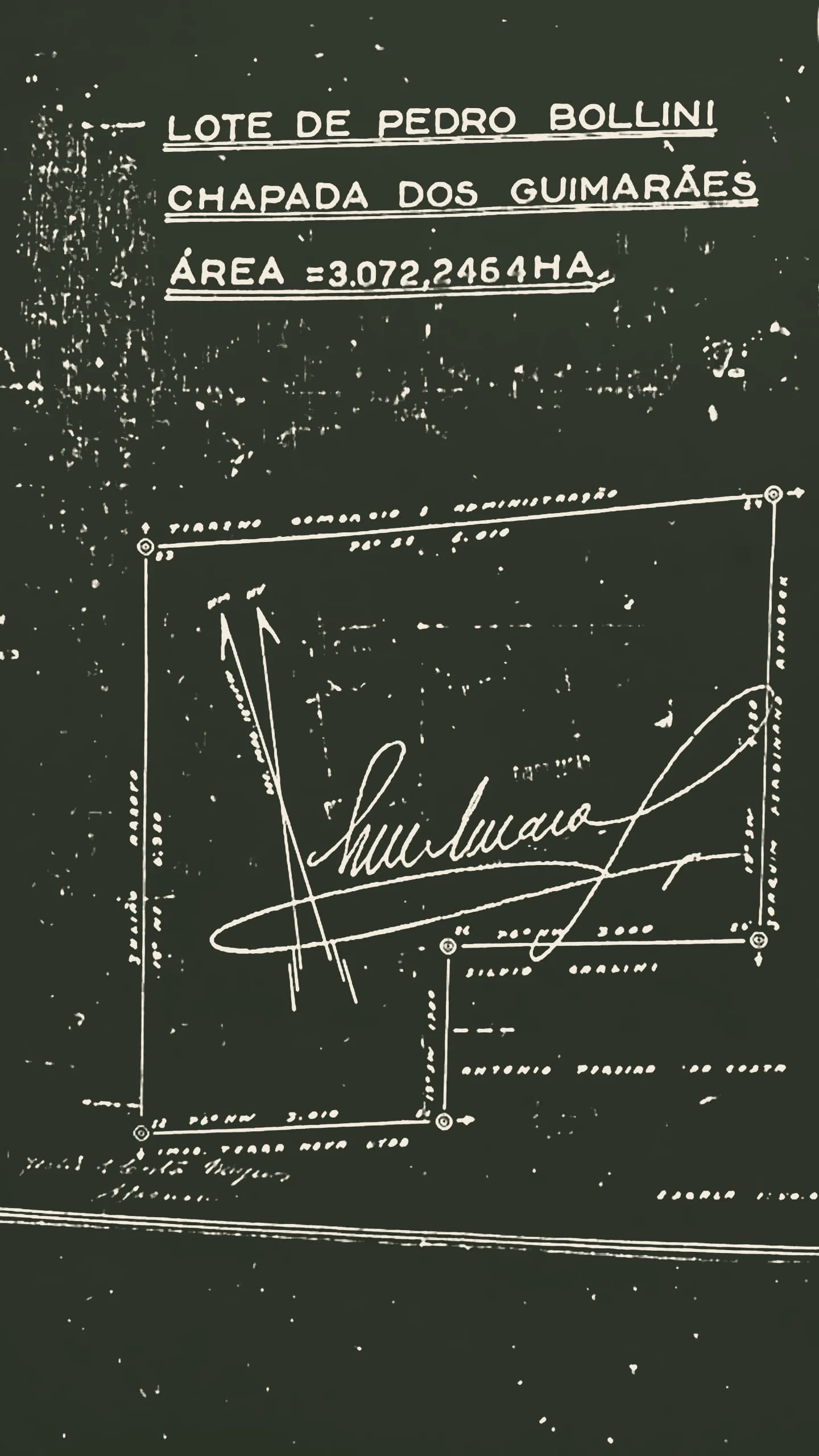
“Lote de Pedro Bollini” — the survey attached to the title.
Family archive · See the original: the survey map
The title was completed only months before the federal government created the Parque Nacional do Xingu in 1961. At that time, Mato Grosso, opposing the park, had been granting land inside the proposed area to colonizing companies. According to the Mato Grosso property registry, Pedro’s land became part of the park.
The choice not to sue
Many title holders in the same position went to court, and Mato Grosso itself fought the federal government for decades. The Bollini family chose differently. Once they understood that the Xingu peoples had lived on that land long before them, they did not sue. History later confirmed their judgment. In 2017 the STF ruled unanimously that the entire park is land of immemorial and continuous Indigenous occupation, with no compensation owed to Mato Grosso.
The thread that ties it together
The coffee wealth that put Maria Aparecida behind the wheel of a Buick in 1929 later carried the family to the Mato Grosso frontier. There, holding a valid state title, they faced a choice between that title and the rights of the people who were there first. They chose to recognize those rights decades before Brazil’s highest court did.
Next