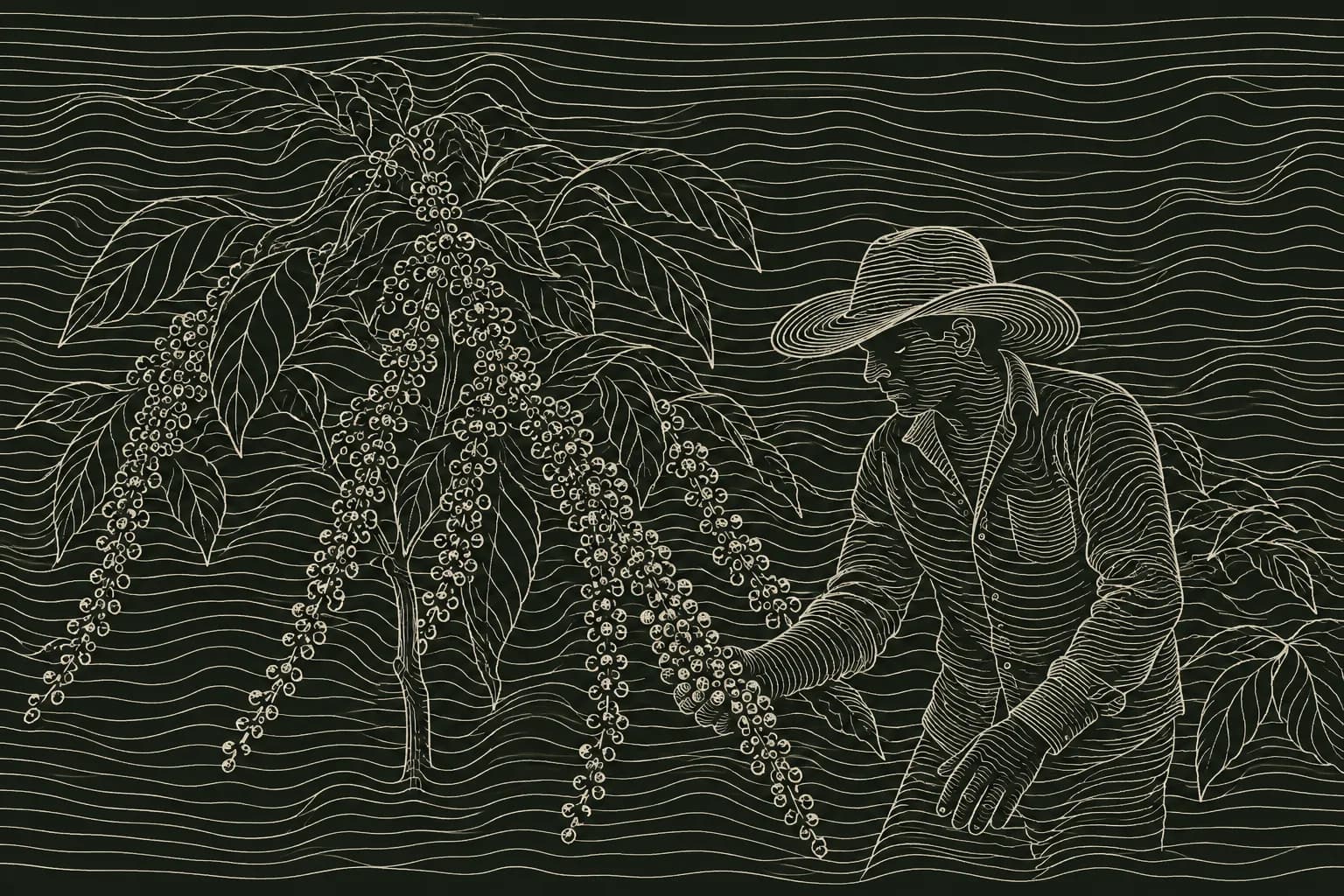
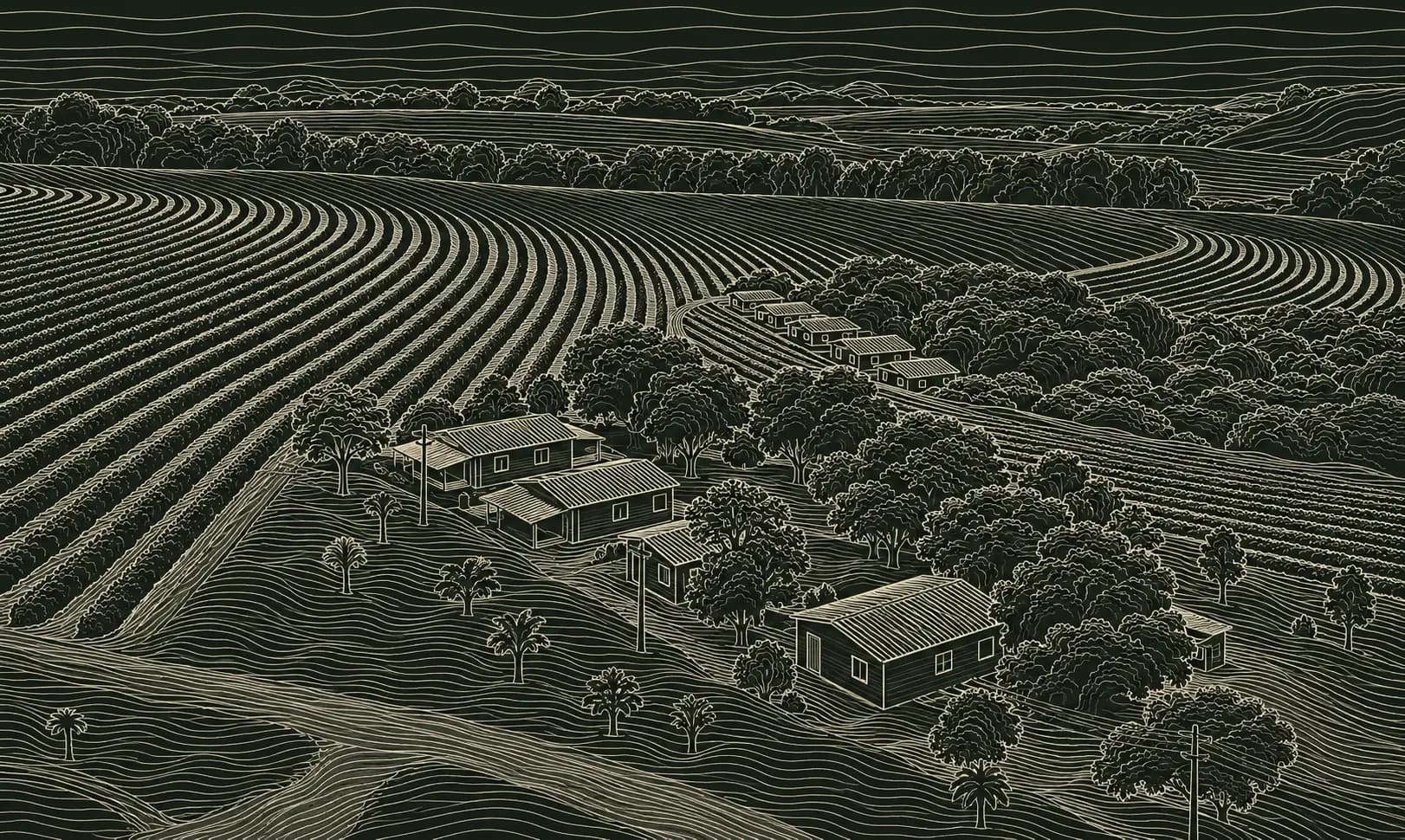
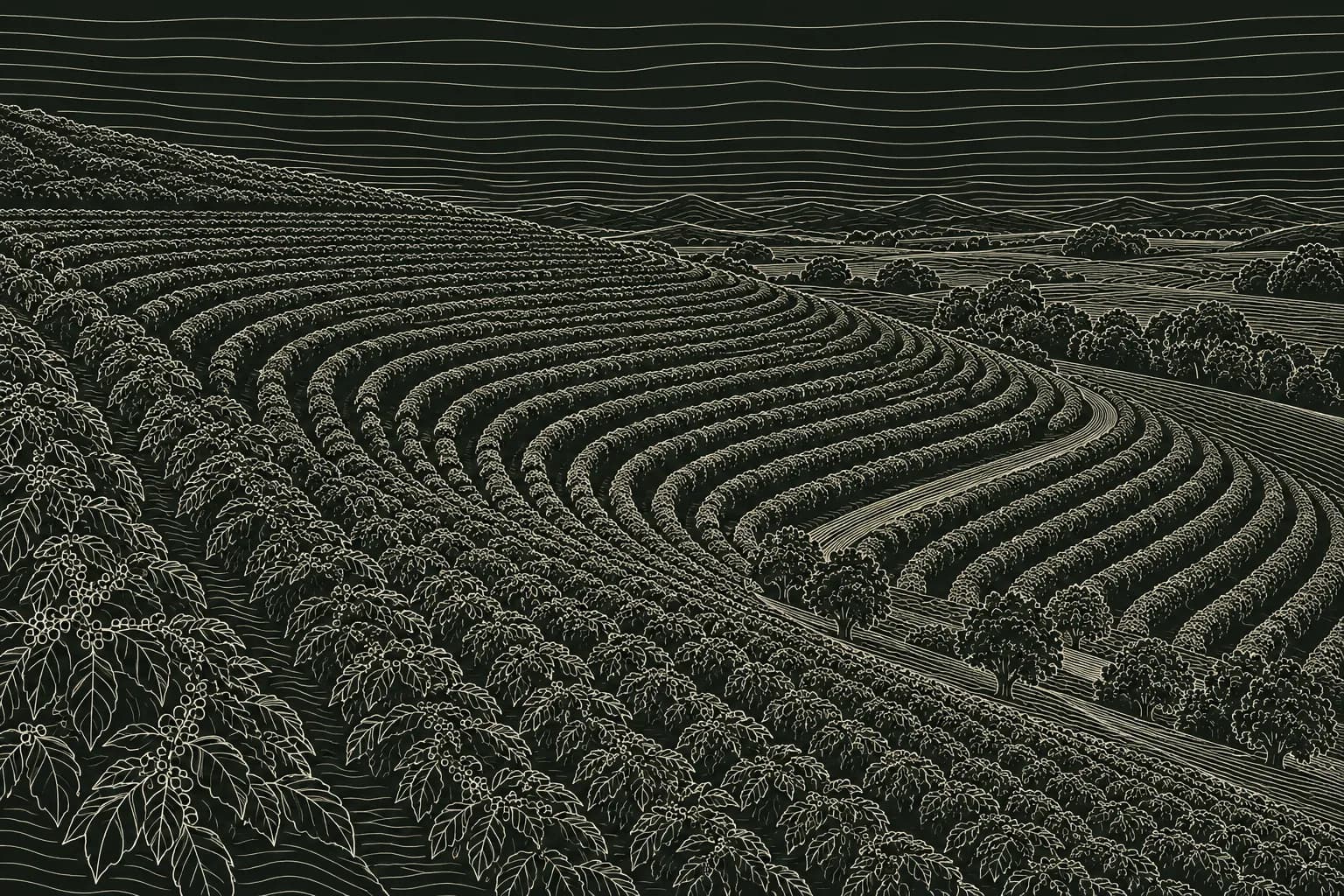
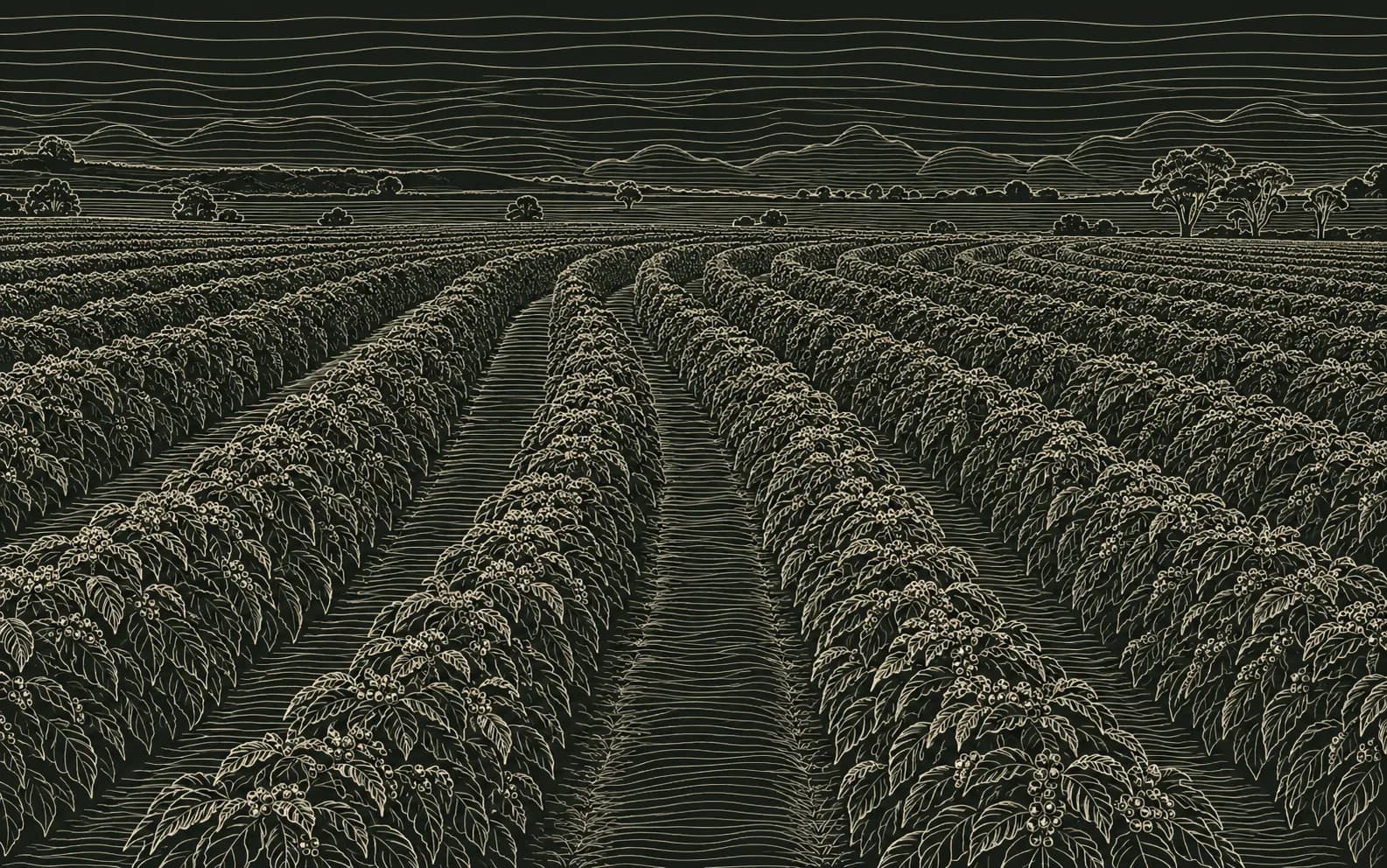
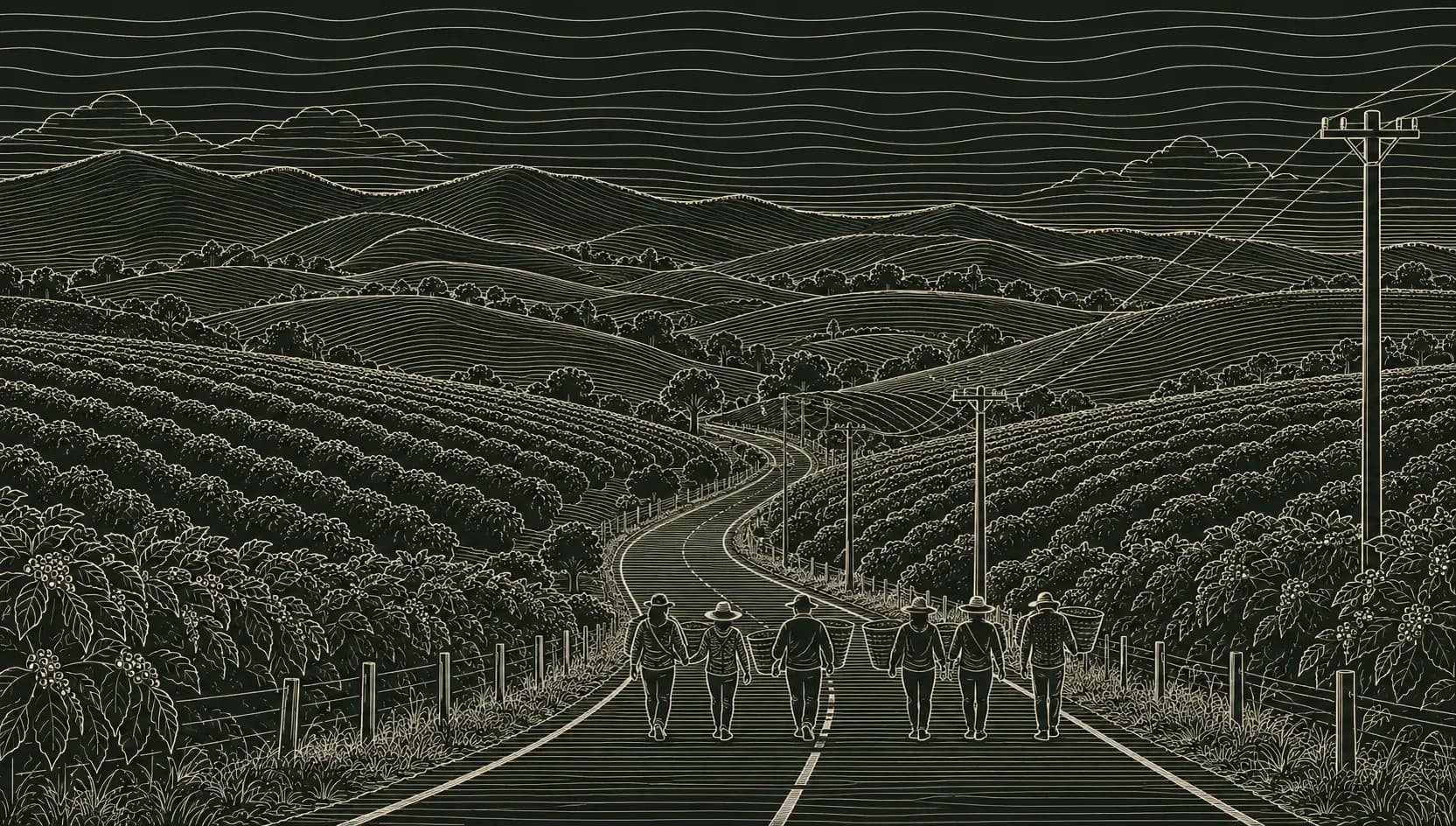
Brazil grows coffee across three biomes and both cultivated species. The difference between a Cerrado arabica and an Amazonian robusta is not a matter of degree — they are different plants, in different climates, at different altitudes, tasting of different things.
The case
Range enough to build with.
Brazil is usually described as one origin. It is closer to a continent of them: coffee grows here from the Amazon basin to the highlands of Minas Gerais, from four hundred metres to fourteen hundred, in humid tropical forest and in dry savanna.
That spread is why a blend drawn only from Brazil is not a compromise. The country contains enough contrast — in species, in altitude, in climate, in cultivar — to build body, aroma, acidity and structure without reaching for another origin.
The country
Two thousand kilometres apart.
The five sit in four states and on both sides of the tropic. Matas de Rondônia is in the Amazon basin at eleven degrees south; Sul de Minas is highland, subtropical, and nearly ten degrees further from the equator. That distance is the range.
Canephora
Robusta and Conilon. Two of the five.
Arabica
The highland species. Three of the five.
Denomination of origin
Matas de Rondônia, granted by INPI in 2021.
The numbers are the order of the list below. The gold ring marks Matas de Rondônia — the only one of the five with a denomination of origin.
Sweet, chocolate, woody, fruity, spice, root and herbal — the sensory profile documented by INPI in the denomination-of-origin examination. The plants are intervarietal hybrids of Conilon and Robusta, selected to express both in an Amazonian climate.
Caramel, chocolate and nuts over a balanced citrus acidity. Hot humid summers and dry winters, with a wide daily temperature range. The first Brazilian coffee region to receive a denomination of origin.
Around thirty per cent of Brazil’s entire crop, grown mostly on farms of ten to a hundred hectares. Mild at 18–22 °C, with microclimates shaped by the Mantiqueira range.
Espírito Santo · Lowland to 900 m · Canephora — Conilon
Close to eighty per cent of Brazil’s canephora comes from here, most of it Conilon, grown between 18 and 22 °C. The country’s second-largest producing state by volume.