Amazônia
Matas de Rondônia
Rondônia
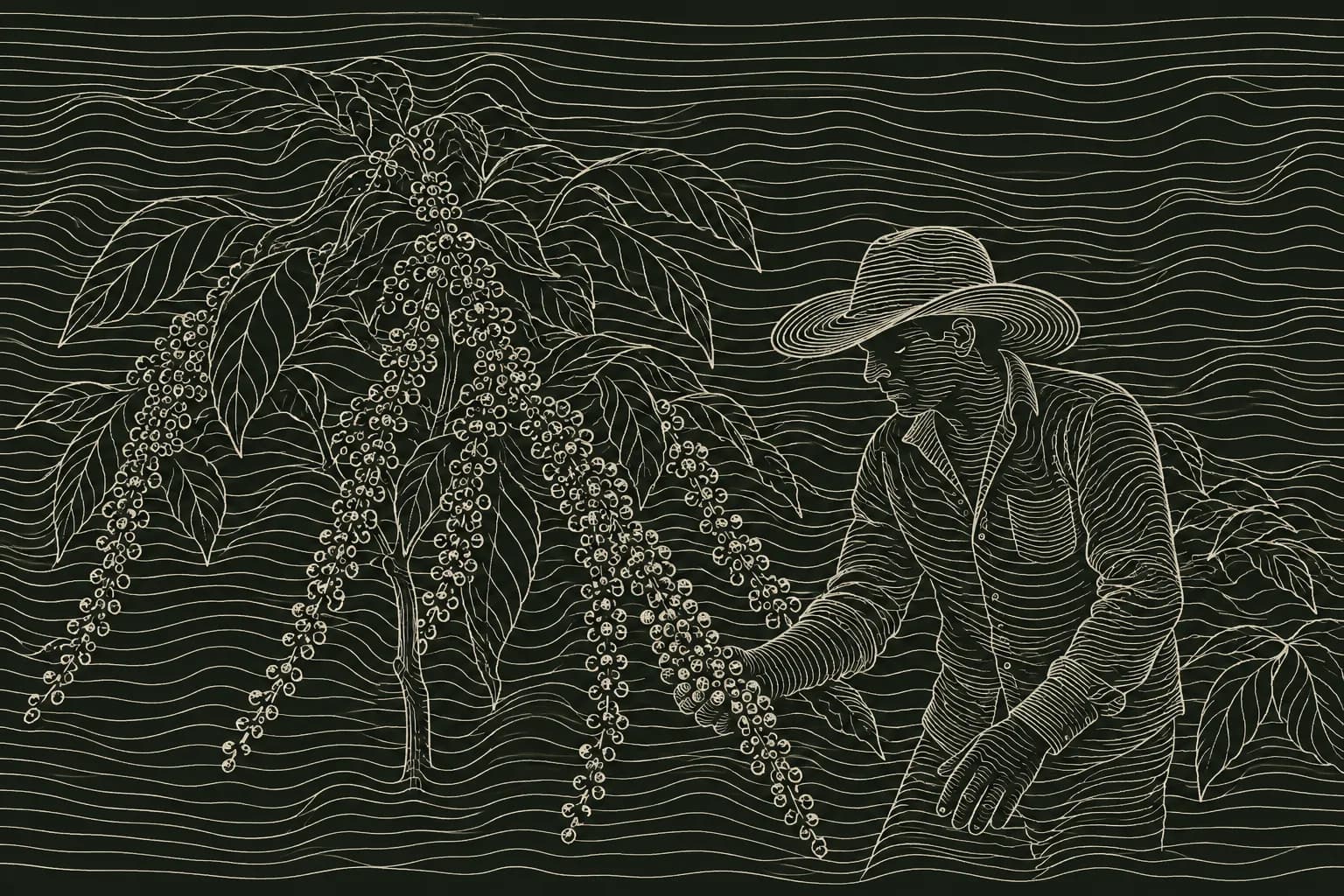
Sweet, chocolate, woody, fruity, spice, root and herbal — the sensory profile documented by INPI in the denomination-of-origin examination. The plants are intervarietal hybrids of Conilon and Robusta, selected to express both in an Amazonian climate.
At a glance
- Biome
- Amazônia
- Species
- Canephora — Robustas Amazônicos
- Altitude
- Amazon basin
- Processing
- Predominantly natural
- Delimited area
- 10°–14° S, 60°–64° W
The 15 municipalities
Alta Floresta d’Oeste · Alto Alegre dos Parecis · Alvorada d’Oeste · Cacoal · Castanheiras · Espigão d’Oeste · Ministro Andreazza · Nova Brasilândia d’Oeste · Novo Horizonte do Oeste · Primavera de Rondônia · Rolim de Moura · Santa Luzia d’Oeste · São Felipe d’Oeste · São Miguel do Guaporé · Seringueiras
In depth
The place
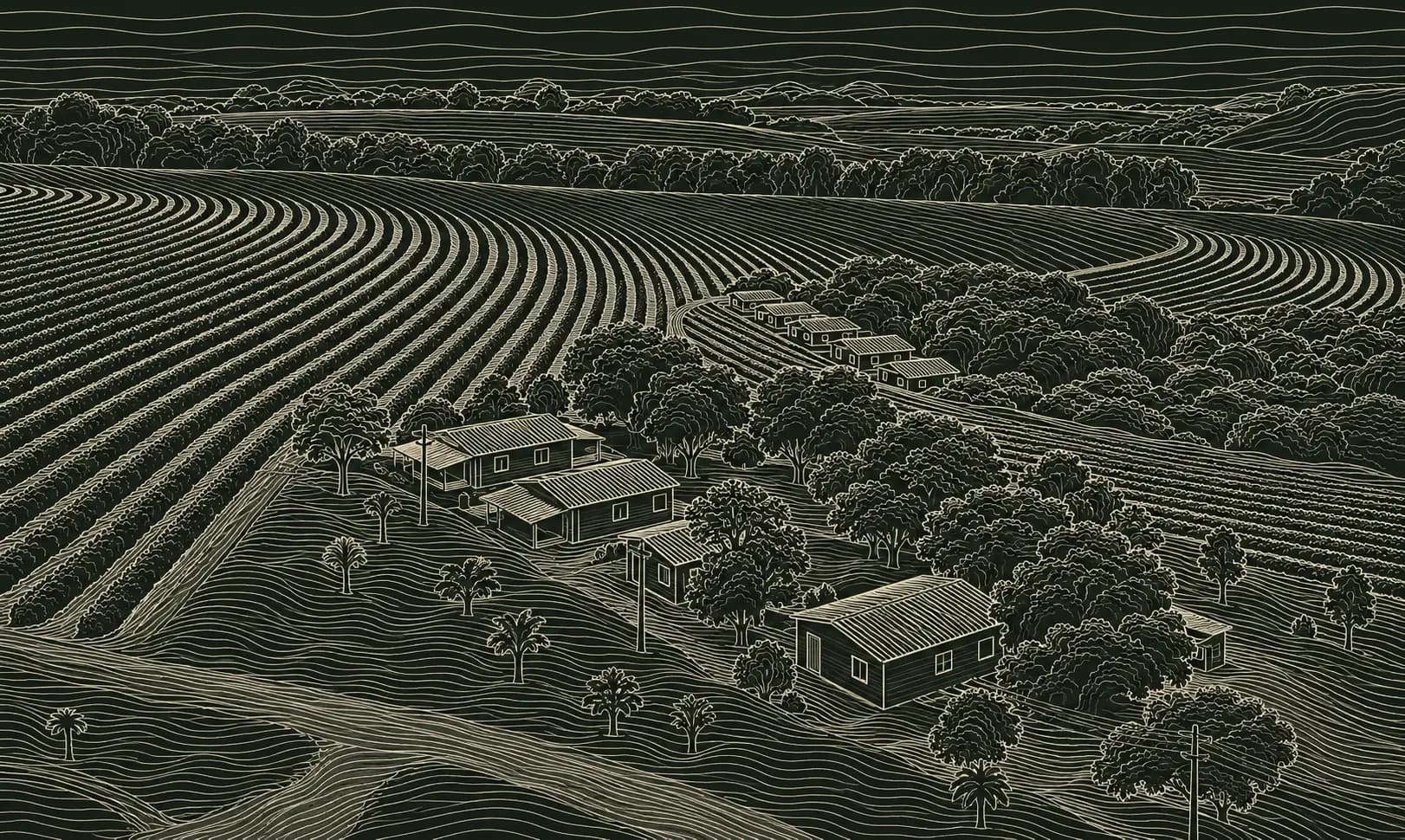
Fifteen municipalities in the western Amazon, and the only place in the world where canephora carries a denomination of origin. Brazil’s national institute of industrial property granted it in 2021, on an application from Caferon, the regional growers’ association — the first such recognition anywhere for canephora, and the first for canephora produced sustainably, with indigenous growers among its producers.
INPI delimited the area by parallel and meridian: between ten and fourteen degrees south, sixty and sixty-four degrees west. That is four degrees of latitude, all of it in the basin, all of it hot — which is the condition arabica cannot take and canephora can.
What grows here is not quite Conilon and not quite Robusta. The plants are intervarietal hybrids of the two botanical varieties, selected over decades to express both in an Amazonian climate — high heat, high humidity, and the moderate water deficit that comes with a dry season in a rainforest.
Embrapa Rondônia released BRS Ouro Preto in 2013, the first coffee cultivar the institute ever protected, and followed it in 2019 with ten more canephora hybrids bred to widen the genetic base of coffee growing in the region. BRS 2299 is one of them: a conilon × robusta hybrid clone with a productive potential above 110 bags to the hectare, resistant to leaf rust and to nematodes, and released for the western Amazon and north-western Mato Grosso.
Grown here
The plants
- BRS Ouro Preto
- BRS 2299
- Robusta × Conilon hybrids
In a blend
What this region offers
Canephora is where body and structure come from. Grown and processed with care, this one also brings the sweetness and cocoa the examination documents — which is the whole argument for treating Amazonian robusta as a component to build on rather than a filler to hide.
The other four